


simple blood test
to reveal what’s next in advanced melanoma¹⁻⁴
to reveal what’s next in advanced melanoma¹⁻⁴



In second-line advanced melanoma, limited options are a clinical reality.5,6
For patients with advanced melanoma whose disease is progressing, or who are refractory to or intolerant of immune checkpoint inhibitors, subsequent standard options yield diminishing returns and outcomes remain poor.5,7-9
10% - 30%
ORR across treatment modalities in post–PD-1 advanced melanoma5,7-9
Objective response rates (ORR) across post–PD-1/L1 pretreated advanced melanoma cohorts vary by therapeutic strategy: 10.7% with salvage chemotherapy; 12.0% with nivolumab + relatlimab dual checkpoint inhibition; 28.0% with ipilimumab + nivolumab; and 31.4% with lifileucel TIL cell therapy. These data reflect distinct trials with varying study designs, endpoints, and patient populations. 5,7-9





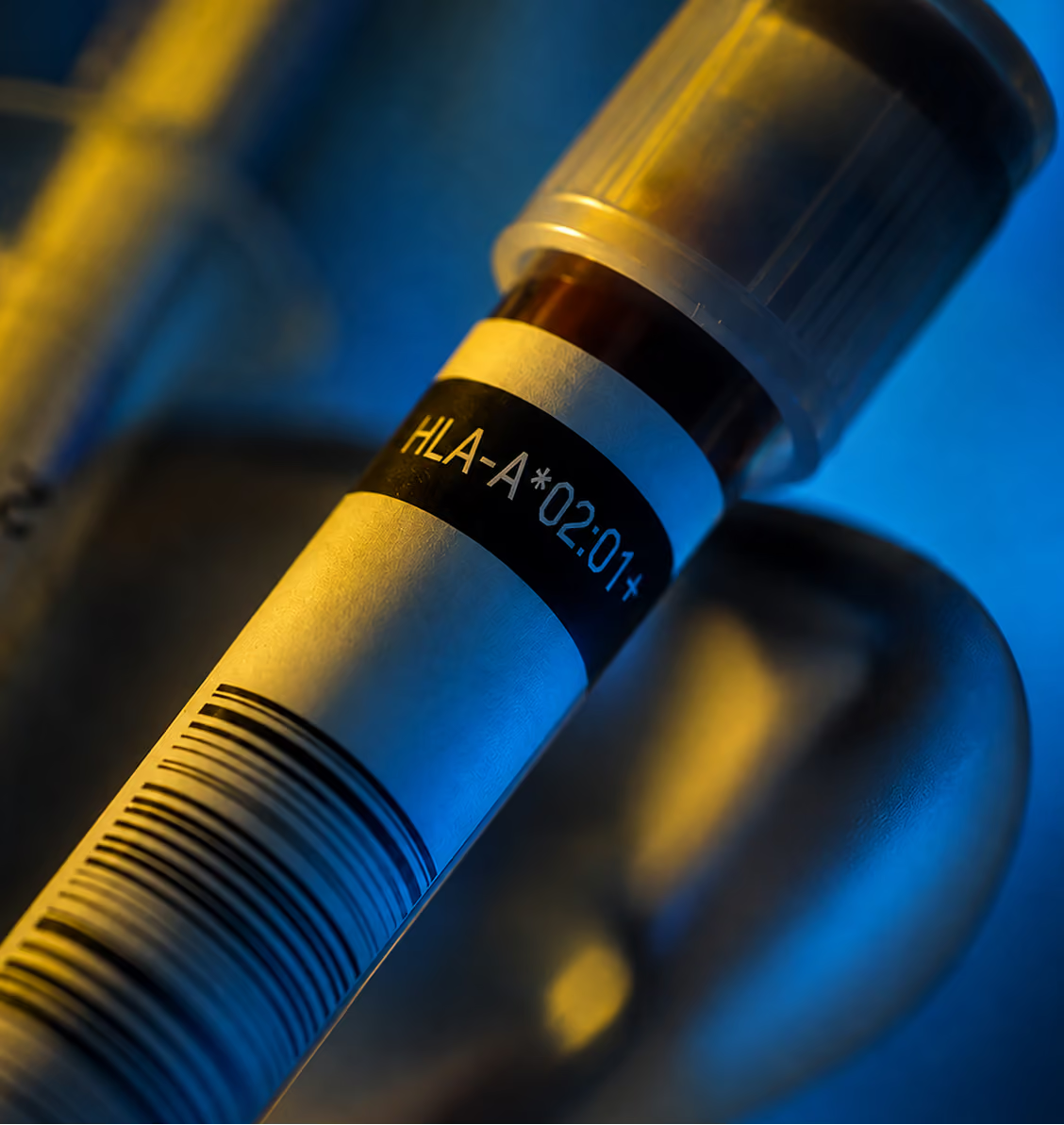
Early HLA identification can reveal a path to emerging TCR T-cell therapies.
TCR T-cell therapies engineer immune cells to recognize tumor-associated antigens. Once processed, these intracellular-derived targets are displayed on the tumor cell surface by HLA molecules.10,11


The potential of
intracellular targeting:
1
Nearly 100% of the tumor proteome
can be targeted by TCR T-cell therapies by accessing intracellular proteins11-13
2
~25% of the tumor proteome
can be recognized by conventional CAR T-cell approaches, which are limited to cell-surface proteins11,12
Among these intracellular targets is

Up to 90% of cutaneous melanomas express PRAME15-17
Minimal PRAME expression is seen in normal tissues16,18
PRAME offers a precise target to potentially limit off-tumor toxicity15,18
HLA-A*02:01 is the key to making intracellular targets recognizable to TCR T-cell therapies.
TCR T-cell therapies are HLA-guided. By presenting PRAME-derived peptides on the tumor cell surface, HLA-A*02:01 makes an otherwise inaccessible antigen visible to the engineered TCR.14,19-23
HLA-A*02:01 is among the most common HLA class I alleles worldwide and is present in nearly half of the US population.24,25



Test every advanced melanoma patient for HLA-A*02:01 at diagnosis to inform and enable future treatment decisions.3,26

Simple blood test establishes HLA-A*02:01 status as part of the baseline workup in advanced melanoma1-4
Germline marker that does not change with disease progression or treatment and remains valid when making second-line treatment decisions27
High resolution, four-digit test is required to distinguish HLA-A*02:01 from closely related alleles4,26,28
Peripheral blood test is the simplest and preferred specimen for high-resolution HLA testing. Results may also be available through many standard NGS panels4,26,28
Standardized EMR documentation ensures the result is available at the first sign of progression to inform treatment decisions3,27,29
Stay ahead of what's next
Sign up for the latest education, resources, and clinical updates on HLA-A*02:01 and emerging PRAME-directed cell therapies.
Thank you! Your submission has been received!
Oops! Something went wrong while submitting the form.
Abbreviations: CAR T, chimeric antigen T cell; EMR, Electronic Medical Record; HLA, human leukocyte antigen; NGS, Next-Generation Sequencing; PRAME, Preferentially Expressed Antigen in Melanoma; TCR, T-cell receptor.
References